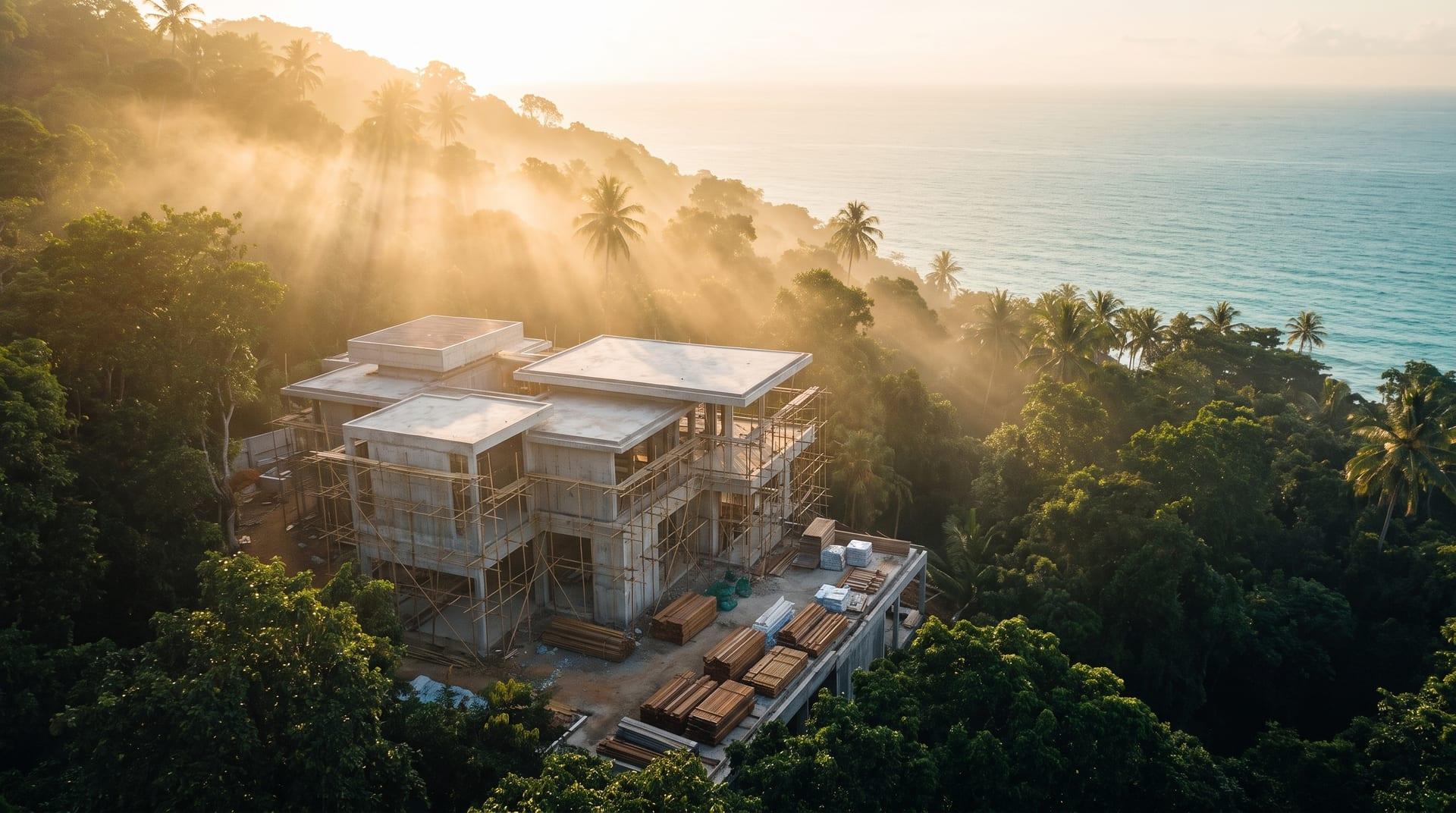
What are you buying before the villa exists?
An off-plan purchase begins with a contract for future performance. You are agreeing to pay for a specified property and a specified legal interest, while construction, registration or both remain unfinished. Separate those promises before comparing floor plans: the villa building, the rights over its land, access to the estate and any management agreement can involve different documents and counterparties.
For an ordinary foreign villa buyer, direct ownership of Thai land is generally unavailable. A land lease with appropriately structured building ownership, potentially supported by registered superficies, may be considered with an independent Thai lawyer. Superficies is a right to own a building on another person's land. It is not a device that turns the land into foreign freehold, and its registration needs to fit the transaction.
A registrable residential lease has a maximum term of 30 years. Leases exceeding three years need Land Office registration to be enforceable beyond that period. Do not price a package marketed as “30+30+30” as though all those years were already registered. Ask when the initial term starts: commencement during construction could consume useful years before you can occupy the house. Review the practical differences in freehold and leasehold ownership.
If the product is a condominium, the analysis changes. A foreign freehold unit must fit the foreign ownership quota, currently 49% of the registered condominium's sellable floor area. A villa-shaped building is not necessarily a condominium unit; request the legal classification and the documents that will establish the promised interest at completion. Marketing labels such as “residence” do not resolve this question.
Put the deliverable in writing
Ask the lawyer to describe what you will hold after completion, whose name appears on each registration, and which promises remain contractual. Match that description to the reservation form, sale agreement, land documents and payment recipient. If the developer says a different company will later grant the lease, that company's obligations need examination before money moves.
Rules change; confirm with an independent Thai lawyer before paying a deposit. A suitable answer is a written ownership diagram with identifiable parties and registrable rights, not an assurance that every other overseas buyer uses the same arrangement.
How to check a Phuket developer and its permissions
Check the company that owes you delivery, rather than stopping at the brand on the sales gallery. Request its registration number, current company documents, authorised signatories and financial statements. The Department of Business Development's DataWarehouse+ service provides a starting point for company information; ask your lawyer to obtain and interpret the records relevant to the contracting entity.
A well-known group may sell through a separate project company. Ask whether any parent company actually guarantees that company's obligations, and have the guarantee reviewed if offered. Registered capital, a stock-exchange connection or a list of previous projects is not evidence that sufficient cash is available to finish this site. Request an explanation of construction funding, lender involvement and dependence on future buyer instalments.
Then investigate delivery experience. Visit completed developments by the same team, inspect their condition and ask willing owners about defect correction and management. Treat testimonials as leads for checking, not verified accounts of financial performance. An attractive show villa demonstrates a finish standard; it does not establish that the road, drainage or remaining homes will be completed on the same basis.
The land search must identify the registered owner, mortgages and other rights affecting the project. If a lender has security over the land, require the lawyer to establish the release mechanism for your particular plot or unit. “The bank knows about the project” is not a substitute for a documented completion arrangement. Use the title and due-diligence checklist to define the legal work.
Ask for the construction permit, approved drawings and any required environmental approval. ONEP's Smart EIA Plus offers a project search, but a search result must be matched to the correct owner, location, phase and approval status. An application, a report submission and approval are not interchangeable. Where the developer says an assessment is unnecessary, obtain a reasoned confirmation of the applicable requirements rather than assuming every villa project follows condominium rules.
Finally, have the proposed footprint checked against the approved scheme and site conditions. Hillside drainage, retaining structures and road access deserve technical review alongside legal work. Record missing documents as unresolved conditions, with a deadline and a decision to pause if they remain unavailable.
Off-plan payment plans: what each instalment buys
A payment schedule should describe evidence of progress, not just dates on a calendar. In Phuket, reservation payments are typically around 100,000–500,000 THB (approximately USD 3,000–15,000), contract payments around 25–35%, with construction schedules commonly spanning 24–36 months. These are indicative practices, not statutory limits or a recommendation to accept the first schedule offered.
Before reserving, establish whether the deposit forms part of the purchase price, who holds it and which failed checks trigger repayment. Ask for the refund procedure, deadline and permitted deductions in writing. A reservation advertised as refundable can still be disputed if the agreement does not define the circumstances or requires the seller to agree that a problem is material.
| Payment stage | Evidence to request | Point to negotiate |
|---|---|---|
| Reservation | Identified property and receiving company | Due-diligence refund conditions |
| Contract | Reviewed documents and agreed specification | Conditions before a larger payment |
| Construction | Independent confirmation of the stated work | Inspection and dispute procedure |
| Completion | Agreed registration and handover evidence | Balance release and defect treatment |
For construction payments, define what “structure complete” or “watertight” means in this contract. Ask who certifies the milestone, whether your inspector can attend, and how disputed work is handled before the instalment falls due. A dated aerial photograph can show activity, but cannot establish waterproofing quality, hidden services or compliance with approved drawings.
Build the cash-flow plan in baht, including furnishing, legal work, registration, bank charges and alternative accommodation if delivery slips. Dollar equivalents in this guide use approximately 33.5 THB per USD for comparison, not a promised conversion rate. Keep sufficient liquidity for the remaining instalments; developer credit during construction does not mean a Thai mortgage will be available at handover.
Agree the funding route with your banks before signing. For a foreign freehold condominium, preserve qualifying foreign-currency transfer evidence, normally an FET or the bank documentation accepted for the amount and transaction. A leasehold villa does not carry the same statutory FET requirement, but still needs a traceable funding record. Mainland Chinese buyers must also address home-country rules: SAFE's annual personal foreign-exchange facilitation quota is USD 50,000 equivalent, and it cannot be used for overseas property purchases. Instalments do not remove that restriction.
Escrow, delay clauses and the right to leave
Escrow can reduce the risk of paying before the agreed conditions are met, but it is not automatic in Thailand. It is optional under the Escrow Act, and many developers do not offer it. Ask early whether the seller will use a licensed escrow provider, then have your lawyer review the actual holding and release terms before you transfer funds.
Do not equate a developer's separate bank account or an agent's promise to “hold the money” with statutory escrow. Verify who controls the account, when the seller can receive funds and what happens if completion is disputed. Escrow protects money only while it remains subject to the arrangement; an instalment released to fund construction is no longer waiting safely for your final registration.
Your contract also needs a meaningful completion definition. A roof and functioning pool do not answer whether the promised legal interest can be registered, whether access and utilities are ready, or whether common facilities are usable. Specify which items must be finished before handover and which minor defects may remain under a documented correction procedure.
Negotiate the failure scenario
Have the lawyer compare the target completion date, permitted extensions and final contractual deadline for withdrawal. Examine what counts as a developer delay, how notices must be delivered and when refunds become payable. Force-majeure wording should be reviewed for breadth; do not assume every interruption gives the developer an unlimited extension.
Delay compensation is useful only after its calculation basis, cap and enforceability are understood. A daily percentage might apply to the amount already paid rather than the full price, and a small cap can leave much of your accommodation cost uncovered. Ask the lawyer to calculate the proposed clause against your own payment schedule instead of treating a printed percentage as adequate protection.
A right to terminate is different from a practical ability to recover money. Request an assessment of the responsible company's resources and any security or enforceable guarantee supporting repayment. If there is no convincing protection and the proposed payments substantially outrun verified work, reducing exposure or choosing a completed property may be the more sensible decision.
Keep negotiated changes in the signed documents and attachments. A salesperson's email about an upgraded kitchen, resale assistance or guaranteed completion should not remain disconnected from the agreement your lawyer has reviewed.
Construction monitoring and the handover inspection
Appoint an independent technical inspector early enough to influence the payment process. Agree access to the site and the records the inspector can review before signing the contract. The inspector's role is different from the lawyer's: physical workmanship, drainage and installed equipment need technical assessment, while title, rights and contractual remedies need legal analysis.
Use a single written specification as the reference throughout construction. Identify the drawings, materials, equipment, included furniture and permitted substitutions, together with the approval process for changes. “Equivalent quality” needs scrutiny when an air-conditioning system, glazing product or waterproofing detail is replaced. Keep variation approvals, revised prices and effects on completion in the same document trail.
For a hillside villa, ask the inspector to review the scope of structural and drainage checks and whether specialist advice is needed. Visit after rain where practicable, look for surface-water paths and confirm how retaining walls and shared drainage will be maintained. A sea view can be visually compelling while revealing nothing about the obligations attached to the slope below it.
As completion approaches, prepare a snagging list tied to rooms, systems and photographs. Test water pressure, drainage, pool equipment, electrical fittings, doors, windows and air conditioning within the agreed inspection scope. Record inaccessible or untested items rather than treating silence as a pass. Ask who will repair each defect, by when and how the repair will be verified.
The acceptance document deserves legal review as well. Check whether signing it acknowledges completion, starts contractual warranty periods, waives claims or releases the last payment. Negotiate any retention before signing the purchase agreement; do not assume you can invent a deduction at handover without risking buyer default. Material defects and minor cosmetic items may need different contractual treatment.
Obtain the documents needed to operate the home: approved and updated drawings where available, equipment manuals, warranty contacts, utility details and the estate management agreement. Confirm the procedure for reporting a failure when you are overseas. Keys and a welcome pack are not a substitute for that operating file.
Coordinate the physical inspection with the lawyer's registration plan. For a villa lease, ask for evidence of the registered lease and any separately agreed building rights; for a condominium, confirm the applicable unit transfer requirements. The final payment should follow the agreed closing conditions, not pressure to attend a celebratory handover.
Off-plan or completed property: make the comparison fair
Off-plan can suit a buyer who values a specific layout, finish selection or construction payment schedule and can tolerate uncertainty about moving in. It becomes much less attractive when the family must occupy by a fixed date or the remaining price depends on rental income starting immediately. Compare the consequences of a delay before comparing the promised discount.
A completed villa gives you an existing building to inspect, but still needs legal and technical due diligence. It may have unauthorised alterations, poor drainage, defective equipment or an ownership arrangement unsuitable for you. The meaningful comparison is between fully checked alternatives with equivalent rights, not between an immaculate rendering and an unexamined resale listing.
| Decision factor | Off-plan question | Completed-property question |
|---|---|---|
| Occupation | Can you absorb delayed delivery? | Is vacant possession documented? |
| Quality | What specification is enforceable? | What does inspection reveal? |
| Rights | What will be registered, and when? | What rights exist and can transfer? |
| Total cost | What remains excluded or uncertain? | What repairs and replacements are due? |
Run a downside budget without appreciation, a quick resale or promised rental payments. Include the money tied up during construction, alternative accommodation, furnishings and reserves after completion. Rental projections should be assessed separately for lawful operation, operator costs and owner-use restrictions. A marketing guarantee does not itself establish either hotel permission or the payer's ability to honour it.
Read the management agreement before buying into a rental programme. Clarify whether participation is compulsory, how owner stays are allocated, who controls rates and how expenses are reported. A villa purchased for family holidays can disappoint if the contract restricts the very dates you intended to use it. Compare that arrangement with your actual calendar, not a projected annual occupancy figure.
Your exit also needs investigation before entry. Ask about assignment before completion, consent requirements, charges and the remaining lease term on a later sale. Do not assume the developer will find another buyer or that a new purchaser will receive a fresh lease automatically. Request written answers that the lawyer can reconcile with the contract.
Use the villa purchase process to turn a viable project into a closing checklist. Proceed only when the ownership, funding, permissions and failure scenario all make sense together; an unresolved issue in one of those areas can outweigh attractive architecture or a flexible payment plan.
How to buy off-plan property in Phuket
- Step 1
Define the legal interest
Ask an independent Thai lawyer to identify the proposed land, building or condominium rights and the entities responsible for granting them. Confirm the initial lease commencement date where relevant, and reject pricing that assumes promised renewals are already registered rights.
- Step 2
Check the developer and site
Obtain company records, title information, permit documents and applicable environmental approvals. Match every document to the specific project phase and plot or unit. Commission technical advice on site conditions, and list unresolved issues before the reservation or larger contract payment.
- Step 3
Agree reservation protections
Have the reservation form reviewed before paying. Record the property, price credit, recipient, investigation period and circumstances allowing a refund. Specify the refund deadline and deductions, and keep a copy signed by the party legally responsible for repayment.
- Step 4
Negotiate payment and default terms
Connect construction instalments to measurable work and an agreed inspection procedure. Ask about licensed escrow and review its release conditions if available. Agree completion requirements, delay remedies, a final withdrawal deadline and the treatment of defects before signing the main contract.
- Step 5
Confirm funding and monitor progress
Clear the lawful transfer route with sending and receiving banks, keeping the required source-of-funds and foreign-exchange evidence. Review certified progress against the payment schedule and record approved variations. Do not treat promotional photographs as independent confirmation of a construction milestone.
- Step 6
Inspect and complete the registrations
Arrange technical snagging and a legal review of the completion pack before releasing the balance under the contract. Confirm registration of the agreed rights, record defect deadlines and collect operating documents, warranties and receipts for the future management and resale of the property.
Questions buyers ask
Is buying off-plan property in Phuket safe?
It can be suitable, but safety depends on the specific developer, land rights, permissions and contract. Commission independent legal and technical checks before committing significant money. A staged schedule or established brand alone does not protect your payments. Assess whether you can afford delayed occupation and whether refund promises have credible financial backing.
Can I get my off-plan reservation deposit back?
Possibly, depending on the reservation terms and the circumstances. Ask your lawyer to specify which failed checks permit withdrawal, when the refund is due and whether deductions apply before paying. A salesperson calling the deposit refundable is insufficient. Even a contractual repayment right can require enforcement if the recipient refuses or lacks funds.
Is escrow mandatory for Thai off-plan property?
No. Escrow is optional, and many developers do not offer it. If available, ask your lawyer to verify the provider and review the holding, release and dispute provisions. An ordinary developer account is not the same arrangement. Money already released for construction no longer has the protection of being held pending completion.
What happens if my Phuket developer finishes late?
Your available remedies depend on the contract and applicable law. Review the completion definition, permitted extensions, notice procedure, compensation and termination provisions with your lawyer. Do not stop instalments unilaterally without advice. Preserve progress evidence and correspondence, and distinguish the right to claim a refund from the financial prospects of actually recovering it.
Do off-plan villa instalments need an FET?
A leasehold villa does not have the foreign freehold condominium FET requirement, but you should retain a complete bank trail. If the purchase is a foreign freehold condominium, arrange qualifying inward-transfer evidence with the receiving bank for the instalments. Mainland funding restrictions also remain relevant; dividing the price does not make a prohibited foreign-exchange purpose permissible.
Sources
- Chambers: Thailand Real Estate 2026, legal due diligence and property rights
- Department of Business Development: DataWarehouse+ company information
- ONEP Smart EIA Plus: environmental assessment project search
- ThaiLawOnline: escrow accounts and voluntary protection in Thailand
- SAFE: personal foreign exchange rules, annual facilitation quota and prohibited uses
Editorial guidance, not legal or tax advice. Thai rules change; confirm your case with an independent Thai lawyer before paying a deposit.